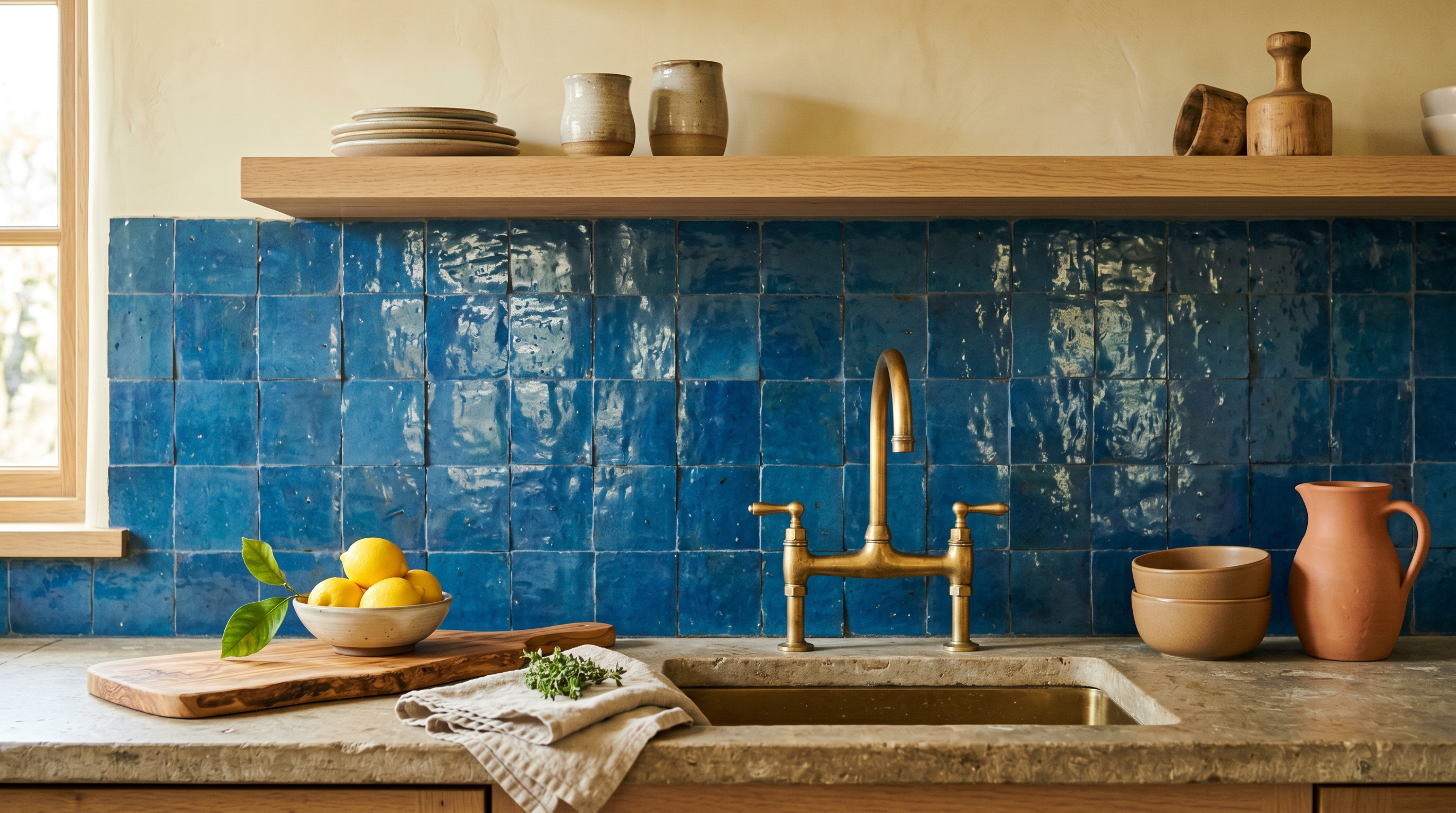
 Mediterranean kitchen detail
Some kitchens are built for performance. This one is built for a slow morning — coffee on the counter, light moving across plaster, nothing in a hurry. The wall is where it speaks up: a backsplash of hand-glazed zellige in a deep, sunlit blue, the whole surface shifting as the light moves across it. A bowl of lemons throws the warmth back, and a sprig of green sits on the counter.
The bones are simple: warm plaster walls, open shelving in olive wood, and brass fixtures that have been left to age instead of polished to a shine. The trick to making it feel collected rather than staged is to let a few real, used things stay out — a wooden board, a bowl of lemons, a linen cloth folded once.
The warm-on-warm palette
Everything else sits in a warm band — plaster, oak, brass, terracotta clay — so the deep blue zellige has room to be the thing that sings. Because the colors are close, the textures have to carry the contrast — smooth stone against rough linen, matte ceramic against the soft gleam of unlacquered brass.
Open shelves only work if you treat them like a still life, not storage. A short stack of plates, two or three vessels, one thing made of wood. Leave air around it.
The brass question
Unlacquered brass will patina — it'll go from bright to soft gold over a season of use. That's the look you want. If you can't commit to living with the change, a pre-aged or antique-brass finish gets you most of the way there and stays put.
The pieces
Everything in this room, sourced and shoppable. Links open the retailer in a new tab.
- Olive Wood Serving BoardLive edge, hand-finishedShop →
- Unlacquered Brass FaucetBridge style, aged finishShop →
- Stoneware Bowl SetMatte clay glaze, set of fourShop →
- Linen Tea TowelsStonewashed, set of twoShop →
- Open Oak ShelfFloating, light oak, 36 inShop →
- Terracotta PitcherUnglazed, classic profileShop →
Imagery is AI-generated and curated by Celeste Wren. Product links may be affiliate links — we may earn a small commission at no cost to you. Full disclosure here.